
Memory chips, also known as semiconductor memories, are memory devices that use semiconductor circuits as storage media to store binary data. They are an important component of modern digital systems.
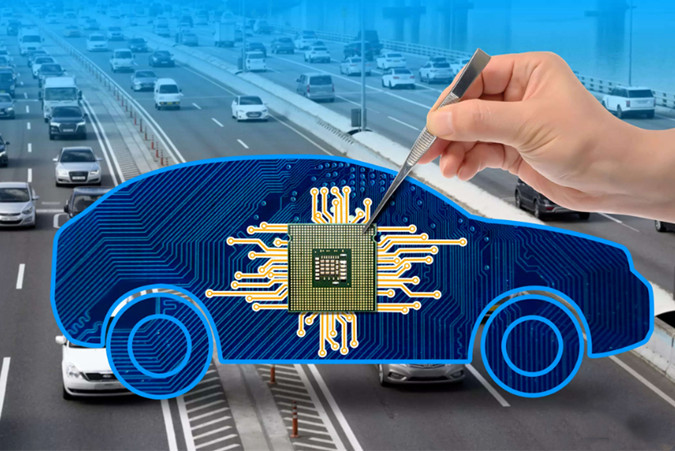
With the development of automotive intelligence and networking, vehicles need to process and store more video, voice and other data information. This has led to an increasing demand and performance requirements for storage chips in automobiles. Therefore, the automotive industry has gradually become an important market growth area for storage chips.
Storage chips, although accounting for the lowest proportion in automotive chips, are in increasing demand. According to data from the Prospective Industry Research Institute, it only accounted for 7% in 2019. The intelligence and networking of automobiles have led to a sharp increase in the amount of data processed and stored by vehicles. According to Counterpoint Research, the storage capacity of a single vehicle will reach 2TB-11TB in the next 10 years. According to Cailian News Agency, the hardware cost of single car storage equipment in 2017 was only about $20, and the cost is expected to reach $300 to $500 when it reaches the autonomous driving L4/L5 level.
The application of automotive intelligence and the Internet of Vehicles has accelerated, especially with the increasing number and resolution of image sensors, increasing the demand for data storage. With the increasing development of technology, future intelligent vehicles, especially autonomous driving, will not only be transportation vehicles, but also information aggregation, data centers, and transmission centers, with increasingly high requirements for data and processing capabilities. It is expected that with the improvement of intelligence level, the capacity and performance of automotive storage systems will achieve rapid growth, and automobiles will become the core factor for storage entering the billions of dollars market.
High level autonomous vehicle have a huge demand for vehicle memory capacity, density and bandwidth
At present, the main storage applications in the automotive market include DRAM (DDR, LPDDR) and NAND (e.MMC, UFS, etc.). Low power LPDDR and NAND will become the main growth engines, and the demand for NOR Flash for chip startup will continue to increase. In addition, higher levels of intelligent driving will directly affect the demand for GDDR, which is a RAM specifically designed for automotive ADAS floating-point computing chips.
More powerful sensors, ADAS/AD integrated systems, central computers, digital cabins, event recording systems, cloud computing, and in vehicle FOTA all require higher requirements for automotive memory. On the one hand, the memory capacity will increase from gigabytes (GB) to terabyte (TB); On the other hand, memory density and bandwidth will be greatly improved.
For example, NAND Flash mainly stores continuous data in ADAS, IVI systems, car central control systems, etc. With the improvement of autonomous driving level, the demand for NAND capacity in ADAS has also expanded. Generally, L1/L2 ADAS only requires mainstream 8GB e-MMC, L3 requires 128/256GB, and L5 may involve over 2TB. In the future, higher density and speed will be required for data production, transmission and recording of advanced autonomous vehicle, so PCIe SSD may be adopted.
Autonomous vehicle have more and more internal and external perception devices, including front camera, internal camera, high-resolution imaging radar, LiDAR, etc. They will use high-density NOR Flash (QSPI, xSPI, etc.) for chip startup and DRAM (LPDDR3/4, LPDDR5, GDDR, etc.) for wide application.
At present, most L1-L2 autonomous vehicle use LPDDR3 or LPDDR4, with a bandwidth of 25-50GB/s. The bandwidth requirement for L3 autonomous driving has been increased to 200GB/s, L4 to 300GB/s, and L5 to 500GB/s. Therefore, LPDDR5 and GDDR6 with higher bandwidth can simplify the system design of high-level autonomous vehicle.
Counterpoint data shows that in the next decade, the memory capacity of a single car will reach 2TB~11TB, meeting the needs of different levels of autonomous driving.
Meanwhile, autonomous driving is data-driven. The development of the ADAS platform requires massive road test data such as cameras, radar, LiDAR, GPS, etc. These data are uploaded to the cloud for storage, AI training, simulation testing, and validation. An hour of L2 or L4-L5 test drive will generate approximately 2TB or 16-20TB of data, so a single test drive will generate 8-60TB of data, and the entire development cycle will generate EB level data
This has triggered a huge market demand for autonomous cloud storage. In China, there are many cloud service providers providing automated driving data cloud storage product solutions, including Tencent Cloud, AliCloud, WD My Cloud, Dawning ParaStor, YRCloudFile, XSKY, etc.
As the functions of intelligent cockpit become increasingly diverse, the demand for larger storage capacity continues to increase, and storage technology continues to innovate. With the widespread application of central integrated digital cockpit, DRAM has developed from DDR2 and DDR3 to LPDDR4, LPDDR5, or GDDR. In addition, the mobile interface has been transferred from eMMC to UFS, and the smart cockpit storage chip will also be the same. High end models may also use PCIe SSDs.
The kernels of UFS and eMMC interfaces both involve NAND flash, but their control interfaces follow different protocols. The maximum communication rate of eMMC is 400MB/s, compared to 1160MB/s of UFS. The communication speed directly affects the vehicle's startup time and software loading time, providing a different experience. To cope with faster startup and read/write requirements, the storage in the cockpit domain must support at least UFS2.1. Qualcomm's third-generation 8155 cockpit SoC already supports UFS interfaces.
The intelligent cockpit of newly launched models showcases increasingly powerful storage capabilities:
The Xiaopeng P7 launched in 2020 is equipped with Qualcomm Snapdragon 820A, 8GB of memory+128GB of storage, supporting users to download more car apps and mini program expansion, emphasizing both practicality and fun;
The next generation ZEEKR intelligent cockpit based on SA8155P, which will be unveiled in 2021, is equipped with a 7nm 8-core CPU, 16GB of memory, and 128GB of storage.
The LiL9, which debuted in 2022, comes standard with two Qualcomm Snapdragon 8155 chips, with 24GB of memory and 256GB of high-speed storage, forming a powerful computing platform.
On-board system requirements overlap
Chinese companies occupy 70% of the market
Structural growth drives the demand for NOR Flash products, which are widely used in automotive electronics. At present, the automotive storage industry has the following structural growth opportunities: on the one hand, the improvement of system complexity puts forward higher off chip storage requirements; on the other hand, more and more application scenarios are based on high-performance processing units, driving the storage requirements of MCU, GPU, MPU, SoC for programs and parameters and FPGA for structured data. From the perspective of application scenarios, the upgrading of automotive ADAS systems, instrument systems, cruise systems, and SOTA all require reliable NOR Flash storage.
Compared with DRAM and NAND Flash, NOR Flash has a smaller size. From the perspective of competition pattern, China Wanghong, Huabang Power and Zhaoyi Innovation occupy the vast majority of market shares. In 2016 and 2017, Micron Technology and Cypress announced to withdraw from some NOR Flash market competition and gradually fade out. The market share of NOR Flash chips is gradually controlled by Taiwan, China Wanghong, Huabang Power and Chinese Mainland Zhaoyi Innovation. In 2020, Huabang Power Wanghong and Zhaoyi ranked among the top three in terms of innovation market share, with respective proportions of 25.4%, 22.5%, and 15.6%.
Zhaoyi Innovation GD25 SPI NOR Flash fully meets the AEC-Q100 certification of vehicle specification level. The full series of GD25 vehicle specification level storage products have been adopted in batches by multiple automotive enterprises, mainly used in vehicle assisted driving systems, vehicle communication systems, vehicle information and entertainment systems, battery management systems, etc., providing the market with nationally produced vehicle specification level flash products.
It is expected that with the improvement of intelligence level, the capacity and performance of automotive storage systems will achieve rapid growth, and automobiles will become the core factor for storage entering the billions of dollars market. Since the 1970s, DRAM has entered the commercial market and has become the largest branch market in the storage field with its extremely high read and write speeds; After the emergence of functional phones, the NOR Flash market has exploded; Entering the PC era, people's demand for storage capacity is increasing, and low-cost, high-capacity NAND Flash has become the best choice.
In the era of intelligence, the market space of the storage industry will further expand, and higher requirements will be put forward for data storage in terms of speed, power consumption, capacity, and reliability. Although DRAM has fast speed, it has high power consumption, low capacity, high cost, and is unable to save data during power outages, resulting in limited usage scenarios; NOR Flash and NAND Flash have low read and write speeds, and storage density is limited by the process. The market urgently needs memory products that can meet new scenarios such as automobiles, and new types of memory with breakthrough performance are about to enter a period of rapid growth.
In terms of storage, innovative products from Beijing Junzheng and Zhaoyi have been introduced into the automotive market in China. Beijing Junzheng has entered the field of automotive storage chips after acquiring Beijing Sicheng, and has reached close cooperation with downstream automotive companies such as Bosch Automobile and Continental Group; The improvement of automotive intelligence and the continuous upgrading of related technologies will also bring about an increase in demand for various types of automotive chips, except for storage chips. Beijing Sicheng's years of chip research and development experience in the automotive and industrial fields will usher in a new development prospect in the era of intelligent driving.
-
Tel
15914148925 -
Whatsapp